

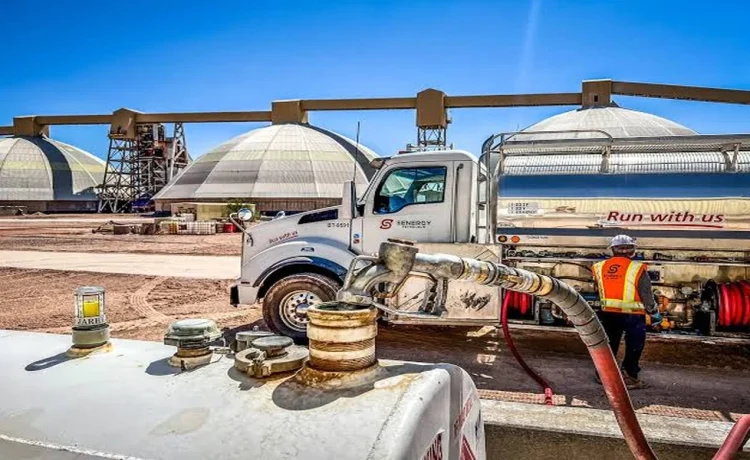
On most active construction sites, diesel is doing more work than almost anything else on the property. It runs the generators, keeps the excavators moving, and fuels the trucks shuttling crews and materials from one end of the site to the other. Because it’s so routine, it’s easy to treat diesel storage as an afterthought – handled the way it’s always been handled, without much scrutiny.
That’s usually a mistake. Diesel fires and spills on jobsites are rarely dramatic. They tend to start small – a cracked fitting, an overfilled tank, a container left too close to a welding operation. But small incidents add up fast in inspection reports, insurance claims, and cleanup bills. A little upfront planning around tank selection, placement, and monitoring prevents most of them.
Understanding Diesel’s Risk Profile
Diesel doesn’t behave like gasoline, and that distinction shapes how it should be stored. Under NFPA 30, the Flammable and Combustible Liquids Code, diesel generally falls into Class II – a combustible liquid with a flash point between 100°F and 140°F. That means it doesn’t ignite as readily as gasoline at room temperature.
Still, OSHA’s construction standards don’t let diesel off the hook. Under its regulation on flammable and combustible liquid storage, diesel remains subject to safe-storage requirements because its flash point falls below the threshold the standard uses to define a flammable liquid on construction sites.
In practice, that means diesel needs many of the same precautions as more volatile fuels: approved containers, adequate separation from ignition sources, and a documented plan for what happens if something goes wrong.
Choosing a Tank Built for the Job
Not all storage tanks are interchangeable. The tank suited to a six-month highway project isn’t necessarily the right call for a two-week residential job. Look for tanks that are UL-listed and built to Steel Tank Institute specifications – those certifications indicate the tank has been tested against fire, impact, and corrosion standards specific to fuel storage.
Double-wall construction is worth the extra cost on most sites. It provides built-in secondary containment, so a breach in the primary wall doesn’t automatically turn into a spill on the ground. Manufacturers such as Tex Tanks build steel systems this way to meet UL and STI requirements while keeping the footprint manageable for an active site.
Footprint is a real consideration in its own right. Congested urban lots or projects with limited laydown space often do better with compact, double-walled cube-style tanks rather than a long horizontal cylinder, since they fit into tighter areas without giving up capacity or containment.
Placement Matters as Much as the Tank Itself
Even a well-built tank can create problems if it ends up in the wrong spot. Keep diesel storage away from site trailers, active excavation, and anywhere welding, cutting, or open-flame work happens. Local fire codes and your site’s Authority Having Jurisdiction typically set specific separation distances – confirm those numbers for your site rather than assuming a generic rule of thumb applies everywhere.
Beyond ignition sources, think about drainage. A tank near a storm drain, or at a low point that channels rainwater toward a creek or ditch, creates an unnecessary path for a spill to reach a waterway. Level, stable ground away from vehicle traffic lanes also cuts down the odds of a forklift or dump truck clipping the tank by accident.
Spill Containment and Environmental Compliance
If a site’s total aboveground diesel and oil storage exceeds 1,320 gallons in containers of 55 gallons or larger, the EPA’s Spill Prevention, Control, and Countermeasure rule likely applies, and a written SPCC plan becomes a federal requirement rather than a best practice.
Even below that threshold, secondary containment is worth building in. The common engineering convention is to size containment for at least 110% of the largest tank’s capacity, with added freeboard if the containment sits outdoors and needs to handle rainfall. A berm, a lined containment pallet, or a double-wall tank can each satisfy this, depending on volume and site conditions.
Fire Prevention and Everyday Handling
Grounding and bonding matter more than most crews realize. Transferring diesel between containers generates static electricity, and without proper bonding, that static can become an ignition source – particularly during transfers in dry, windy conditions.
Construction fire codes also expect portable fire extinguishers positioned near liquid storage areas, along with clear signage and controlled access. None of this is complicated. It’s the kind of detail that gets skipped when a site is moving fast and the tank has been sitting in the same spot since day one.
Monitoring, Inspection, and Maintenance
A tank that passed inspection on delivery day doesn’t stay compliant on its own. Build a simple routine: visual checks for corrosion, loose fittings, or pooling around the base, plus verification that vents and overfill protection devices are unobstructed.
Keep a log recording who checked the tank and when. Documentation matters for two reasons – it gives you a paper trail if a regulator or insurer asks questions later, and it tends to catch small problems, like a slow weep at a fitting or a dented containment wall, before they turn into expensive ones.
Training and Emergency Readiness
Equipment and containment only work if the people using them know the procedures. Crews handling fuel transfers should understand bonding requirements, know where the nearest fire extinguisher and spill kit are, and have a clear sense of who to notify if a spill happens.
A spill kit with absorbent pads, booms, and basic tools costs little compared to the cleanup bill for even a modest uncontained release. Keeping one within reach of the storage area, rather than locked in a conex box across the site, is a small step that pays off when it’s actually needed.
Bringing It Together
None of this requires reinventing how a jobsite runs day to day. It means treating diesel storage as a system – the right tank, positioned correctly, with containment and monitoring built in – rather than a single piece of equipment dropped in a convenient corner. Sites that build these habits early tend to spend a lot less time explaining incidents after the fact.