

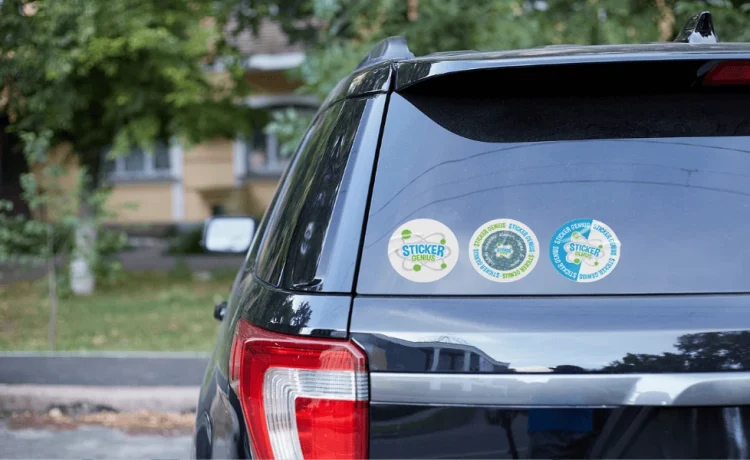
A car decal lives a tough life. It sits in direct sunlight, gets hit by rain, road grit and car wash brushes, and goes through hot summers and cold winters. A sticker that looks great on a laptop may not last long on a rear window.
Whether you’re a business adding your logo to a work van or someone who just wants to personalise their car, here’s what to know before ordering and applying vinyl decals.
What Makes a Car Decal Different
Car decals need to handle conditions that indoor stickers never see:
- Sunlight, which can fade colours over time
- Water from rain and washing
- Temperature changes that cause materials to expand and contract
- Physical wear from wipers, brushes and road debris
That’s why material choice matters so much more for vehicles.
Choosing the Right Vinyl
Vinyl films broadly come in two types.
Calendered vinyl is generally more affordable and suits flat surfaces and shorter-term uses.
Cast vinyl is typically thinner and more flexible, which helps it conform to curves and contours. It’s often chosen for longer-term vehicle applications.
When ordering custom vinyl sticker decals, ask the printer which type they use and what conditions the product is designed for. If they mention outdoor durability, ask what it’s based on and how long it’s expected to last in normal use. A protective laminate can add resistance to scratches and fading, but the exact benefit depends on the specific product.
Types of Car Decals
- Printed decals: full-colour designs printed on vinyl, often with a laminate
- Cut vinyl lettering: single-colour letters or shapes cut from coloured vinyl, common for business names and phone numbers
- Window decals: designed for glass, sometimes perforated so drivers can see through from inside
- Bumper stickers: classic rectangular designs, usually printed
Placement Tips
Where you place a decal affects how it looks, how long it lasts and whether it’s legal.
- Keep the driver’s view clear. Many places have rules about what can be placed on windscreens and front side windows. Check local regulations before applying anything to glass.
- Avoid areas that flex or get heavy wear. Edges near door handles or panels that rub against other surfaces wear out faster.
- Think about readability. For business decals, test how readable your phone number or website is from a few metres away.
- Consider curves. Strongly curved surfaces need a flexible material and careful application.
How to Apply a Decal
- Clean the surface. Wash the area, then wipe it with a suitable cleaner to remove wax and grease. Let it dry completely.
- Check the temperature. Avoid applying in very hot or very cold conditions. A mild, shaded day is ideal.
- Position it first. Use masking tape to hold the decal in place and check it’s straight.
- Apply slowly. Peel the backing gradually and use a squeegee or card to press the decal down from the centre outwards, pushing out air bubbles.
- Let it settle. Avoid washing the car for a day or two so the adhesive can bond properly.
Caring for Car Decals
- Hand-wash where possible, especially in the first weeks
- Avoid pointing pressure washers directly at decal edges
- Don’t use harsh solvents on the decal
- Park in shade when you can to reduce sun exposure
Removing Old Decals
Warm the decal gently with a hairdryer to soften the adhesive, then peel slowly from one corner. Any remaining residue can usually be removed with a suitable adhesive remover. Test any product on a hidden area first.
Designing Your Decal
If you want to customize vinyl stickers for a vehicle, keep the design simple and bold. Fine detail can be hard to see from a distance and may not cut cleanly. High-contrast colours help, especially on tinted windows or dark paint.
Business Vehicles: A Few Extra Tips
If the decal is advertising a business, keep the message short. People usually see a vehicle for a few seconds, so a clear name, what you do and one contact method are enough. Make sure the lettering is large enough to read from a distance, and check that phone numbers and website addresses are correct before printing. If you run several vehicles, keep the design and placement consistent so the fleet looks professional.
Final Thoughts
A good car decal starts with the right material and ends with careful application. Ask your printer about vinyl type and laminate, check local rules about window placement, apply on a clean, dry surface, and treat the decal gently when washing. A little care goes a long way toward keeping it looking sharp.